

Published November 23, 2026 | 6 minute read
Most pump systems don't fail because someone got the original design wrong. They fail because the application changed and the equipment didn't. Production increases. Process conditions shift. Fluids change. Years of small maintenance decisions add up, and one day the pump running today looks nothing like the pump that was specified a decade ago.
Some plants might instinctively replace it, but that may not be the right call. For one, capital and maintenance dollars come from different buckets with different approval processes, which complicates the calculus.
And many plants are instead interested in learning how to modify existing assets to "renew" them and bring them back into alignment with a changed process condition or some other improvement or optimization. Because changes occur over time and are often not readily apparent, it also takes a process of discovery to understand why a pump system is "failing.”
One of the real strengths of Sundyne, which was acquired by Honeywell in June 2025, is its platform’s modular design. Rather than rebuild worn components and hope for the best, engineers can re-target hydraulics, gearing, bearings, seal systems, and gearbox configurations to match current conditions, improving reliability, efficiency, NPSH performance, and operating range.
Facilities running Sundyne equipment can often extend service life indefinitely while cutting lifecycle cost and unplanned downtime.
With more than 50 years supporting rotating equipment across the Northeast, Sunair helps operators figure out which Sundyne pump upgrade truly pays off—whether the goal is reliability, capacity, lower maintenance, or adapting to a process that's already moved on.
Key Takeaways
Sundyne's integrally geared design uses a single high-speed impeller to produce the same head a multistage pump needs several stages to reach, in a smaller footprint at lower installed cost. The straight radial vane Barske impeller behind that design is often more efficient than backswept vane impellers running back on their curve, particularly in low-flow, high-head service.
Sundyne integrally geared compressors are engineered in many cases to run five years or more without maintenance or overhaul. HMD Kontro, part of the Sundyne family, pioneered magnetic drive sealless technology in 1947 and is still innovating. Sundyne’s ANSIMAG line extends that same principle into fully molded PFA and ETFE wetted parts for corrosive chemical service.
Sundyne Marelli API-610 pumps add a wide configuration range, perfectly complementing Sundyne’s specialty “low flow, high head” footprint, and the ability to cast custom volutes that drop into a competitor's footprint.
This is a platform built to run for decades—which is exactly why Sundyne pump optimization, not replacement, is frequently the most practical path to prolonged performance.
Roughly 60% of pump failures start with a seal leak, according to a 2025 European Sealing Association dataset of 3,500 pump failures. That's why installations running a conventional mechanical seal demand so much attention; seal support systems need constant monitoring, and the seals and their support components eventually wear out and need replacing.
Beyond seals, the more common problem is drift: a pump running away from its best efficiency point (BEP), the flow rate where a pump runs most effectively and with the least mechanical stress, burns more energy and wears faster than one running near it. A pump running below its intended minimum flow does the same, quietly, for years. And on older sealless installations, the original containment shell design leaves magnetic coupling losses on the table—losses the HMD Kontro ZeroLoss shell upgrade was built specifically to eliminate, especially on heat-sensitive liquids.
None of this means the equipment failed, though. It simply means the equipment's operating point moved, and nobody updated the pump to match.
Sealed-to-sealless conversion. It’s possible to convert a mechanically sealed Sundyne LMV-801 pump to an LMV-801S, retaining the straight radial vane and diffuser wet end technology and replacing the mechanical sealed back pullout with a magnetic-drive assembly, with either metallic or ZeroLoss non-metallic containment shell.
Competitors’ sealed pumps can be replaced and upgraded by HMD Kontro or ANSIMAG sealless design is a standard Sundyne aftermarket service. This upgrade eliminates the seal support system entirely, cuts lifecycle cost, and gets you to zero product emissions and zero leakage. It does this all while staying compliant with ASME B73.3, ISO 2858, and IECEx.
ZeroLoss shell upgrade. For existing HMD Kontro sealless pumps, this upgrade kit removes magnetic coupling losses from the containment shell, improving both energy efficiency and reliability, which is particularly valuable on heat-sensitive process fluids. Pressure and temperature limits apply to this upgrade.
Gearbox exchange. Sundyne's gearbox exchange program lets operators swap an LMV, LMC, BMP, or BMC gearbox back to factory-original specifications rather than replacing the entire unit. It often makes the most sense when a pump is being converted to a new speed or bearing configuration, or when upgrading an older gearbox to current features. It's not the only path to a healthy gearbox, though. (Sunair's first instinct is always to check whether targeted repair gets you there just as well.)
SundSCHOOL training. Sundyne's Maintenance & Operations School teaches correct installation, operation, condition monitoring, and failure diagnostics. It’s available to customers, partners, and employees alike. For maintenance leaders trying to move the needle on MTBF, upgrading how operators run and monitor the equipment is often as valuable as any hardware change.
The same 60% failure statistic that haunts aging Sundyne installations applies to every mechanically sealed competitor pump running today. Operators of those units live with that failure mode as a matter of routine, not exception.
Sealless magnetic drive design removes the variable entirely: lower installation cost, longer intervals between failures, and no EPA leak monitoring to maintain. Sundyne LMV pumps also hold a documented efficiency advantage in the low-flow range, and Sundyne's sizing approach places the best efficiency point at or near the rated point. This is unlike many conventional multistage designs, meaning there’s less recirculation, vibration, and wasted energy.
That efficiency argument matters more than the purchase order suggests, however. A pump's initial purchase price typically accounts for only 10% to 15% of its total lifecycle cost, with energy and maintenance making up the rest. Equipment that's efficient and low-maintenance from day one wins that math every time, even against a lower sticker price up front.
Sunair is a Tier-1 Authorized Service Center for Sundyne, the manufacturer's highest classification, awarded through an internal compliance program that measures a partner's training, parts inventory, and technical standards. It's not a marketing label, but Sundyne’s confirmation that this shop can be trusted with your equipment.
Optimizing a Sundyne pump takes more than a parts catalog. It takes years of watching how these machines behave under real operating conditions, understanding the intricacies well enough to anticipate a failure before the pump announces it. That's the depth Sunair has built over five decades serving the Northeast and mid-Atlantic from our Willow Grove, Pennsylvania headquarters, and it's where our service surveys earn their keep: catching failures before they happen.
If your Sundyne pump is running off-design due to changes in system curve, fluid properties, process demand, or pump wear—or you're evaluating whether a competitor's mechanically sealed unit is worth converting—that's exactly the conversation worth having before the next failure forces it.
If the pump hasn’t failed outright but is using more energy or wearing faster than it used to, changes in system conditions (pump wear, fluid properties, etc.) have usually shifted its operating point away from its original design point or Best Efficiency Point (BEP). Sundyne’s modular platform lets Sunair re-target hydraulics, seals, bearings, and gearing to match current conditions, which is typically more economical than a full replacement.
It's the process of converting a mechanically sealed Sundyne LMV pump to sealless, or a competitors’ pump to HMD Kontro or ANSIMAG magnetic drive sealless design, eliminating the seal support system entirely. Since roughly 60% of pump failures start with a seal leak, this conversion removes the most common failure mode along with the ongoing maintenance and EPA leak monitoring that come with it.
Tier-1 is Sundyne's highest classification, awarded through the manufacturer's own internal compliance program that evaluates a service partner's training, parts inventory, and technical standards. It's Sundyne confirming Sunair's shop can be trusted with Sundyne equipment, not a self-assigned marketing label.
A Sundyne LMV-3XX integrally geared pump uses a single high-speed stage to deliver the pressure a multistage pump reaches by running several stages at motor speed. It takes up less space, installs more easily, and has no close-clearance wear rings. It needs no pre-warming in high-temperature service like boiler feed, runs more efficiently at lower flows, and its modular gearbox makes repairs faster.
Receive the latest industry news, once a month. Unsubscribe anytime.
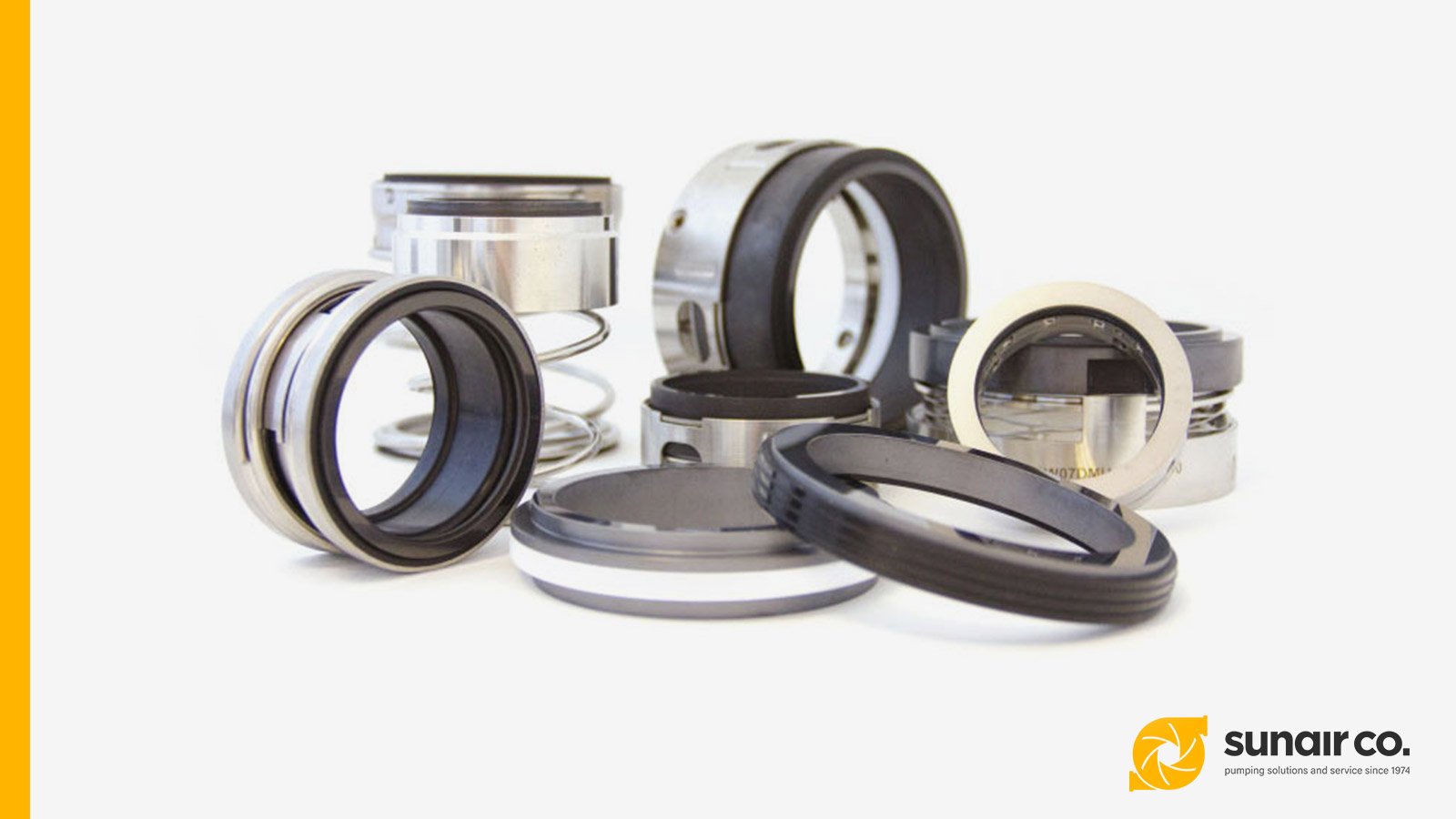
To determine the size of a component mechanical seal, measure the inside diameter of the seal face, the length of the spring, and diameter and thickness of the stationary seat.
Read Now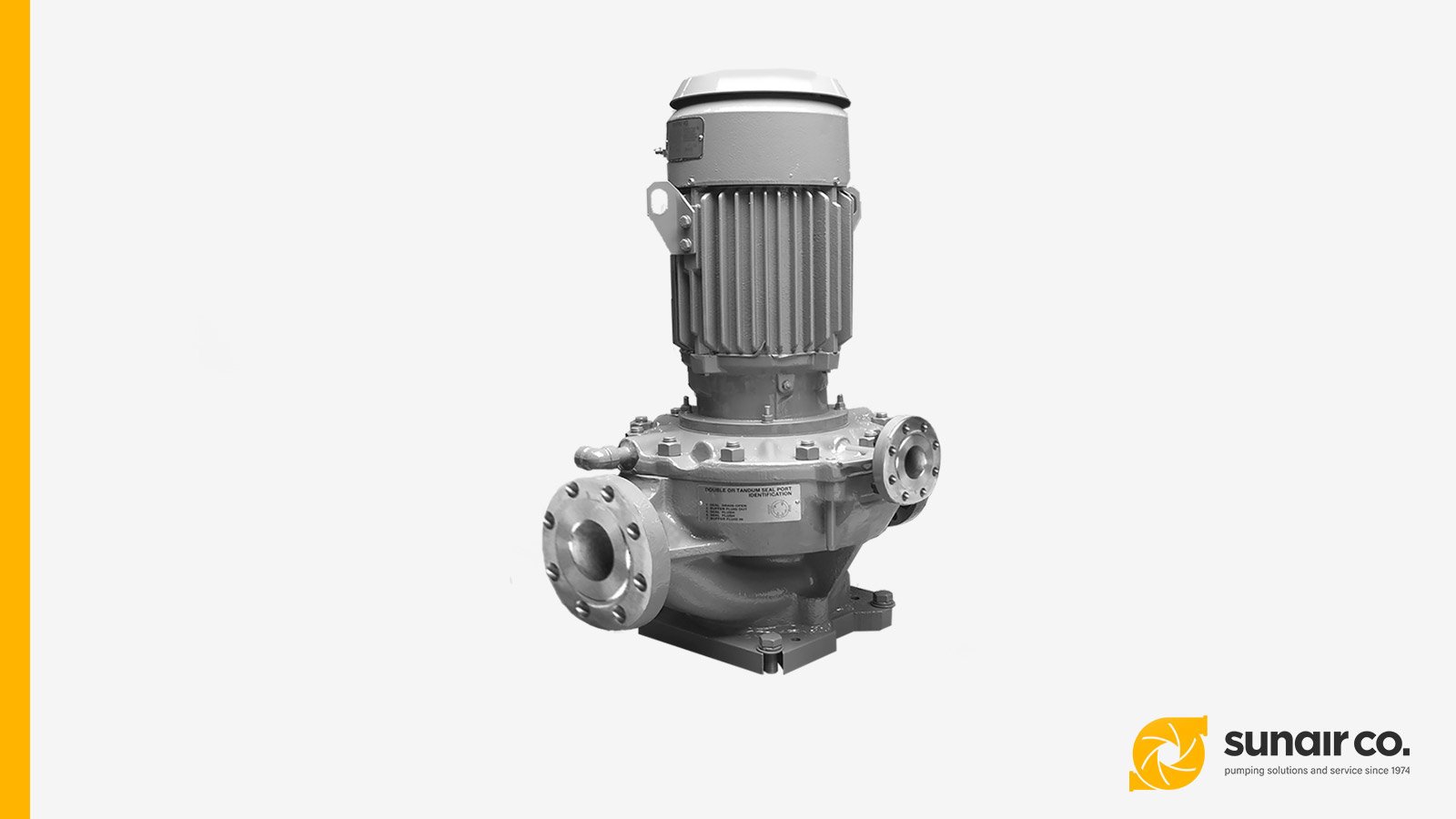
Designed to handle various hydrocarbons in accordance with the high standards of the American Petroleum Institute, API pumps ranging from end suction to vertical turbine models are commonly used in the petroleum, petrochemical, and natural gas industries.
Read Now
QR asset tags expedite data collection and reduce errors by capturing relevant info about your equipment and samples via scanning, eliminating manual entry and potential mix-ups.
Read Now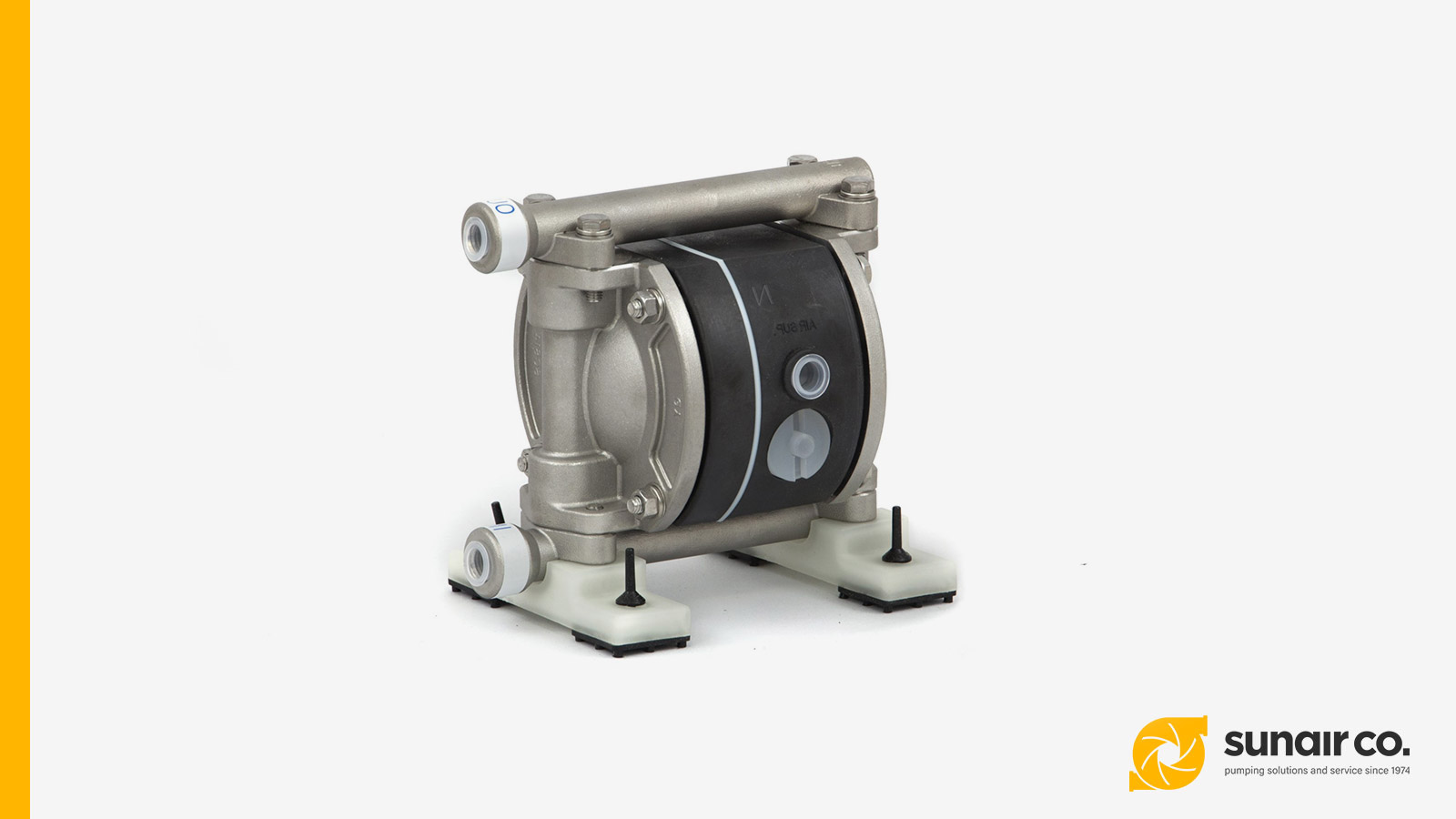
Air-operated double-diaphragm (AODD) pumps utilize compressed air and dual chambers to transport fluids safely and efficiently in support of a wide range of industrial applications.
Read Now
Centrifugal and positive displacement pumps are essential for the liquid transfer, mixing, filtration, and clean-in-place systems of food and beverage processing.
Read Now2475 Wyandotte Road
Willow Grove, PA 19090
Phone: (215) 657-9800
Fax: (215) 657-9881
Email: sunairco@sunair.com
© Copyright 2025 Sunair Co.
Logos on this page are copyrights of their respective companies. The Sunair logo is a registered trademark of Sunair Co.

Leave a comment